Buy yufl.com ?
We are moving the project
yufl.com .
Are you interested in purchasing the domain
yufl.com ?
domain@kv-gmbh.de · 0541-91531010
Buy yufl.com ?
How are colors used in unit testing?
In unit testing, colors are often used to visually represent the status of the tests. For example, green is commonly used to indicate that a test has passed, while red is used to indicate that a test has failed. This color coding makes it easy for developers to quickly identify the status of their tests and take appropriate action. Additionally, colors can be used to highlight specific sections of test results or to differentiate between different types of tests, making it easier to interpret the test output. **
What is the unit of potential energy?
The unit of potential energy is the joule (J). Potential energy is a measure of the energy an object has due to its position or state, and it is expressed in joules in the International System of Units (SI). One joule is equivalent to one kilogram meter squared per second squared (kg·m^2/s^2), which represents the amount of energy required to move an object against a force. **
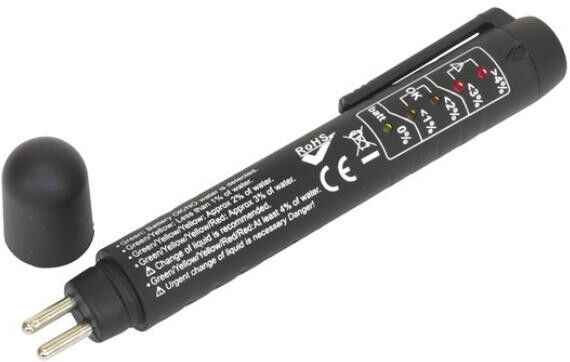

Similar search terms for ENERGY-NE00988-Testing-Unit
Top-Angebote
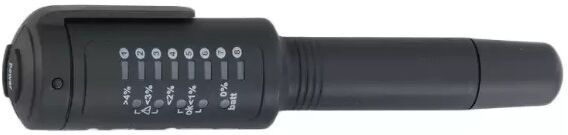
Products related to ENERGY-NE00988-Testing-Unit:



-
What is the unit for energy in physics?
The unit for energy in physics is the joule (J). This unit is named after the English physicist James Prescott Joule and is defined as the amount of work done when a force of one newton is applied over a distance of one meter. The joule is a derived unit in the International System of Units (SI) and is used to measure various forms of energy, including mechanical, thermal, and electromagnetic energy. **
-
What is the unit of energy in physics?
The unit of energy in physics is the joule (J). It is named after the English physicist James Prescott Joule and is defined as the amount of work done when a force of one newton is applied over a distance of one meter. The joule is used to measure various forms of energy, including mechanical, thermal, and electromagnetic energy. **
-
How do you calculate the unit of energy?
The unit of energy is typically calculated using the formula E = P x t, where E represents energy, P represents power, and t represents time. Power is measured in watts (W) and time is measured in seconds (s), so the unit of energy is typically calculated in joules (J), which is equal to one watt-second. This formula can be used to calculate the energy consumption of various devices and systems, as well as to determine the amount of energy transferred or transformed in a given process. **
-
What is the formula symbol and unit of energy?
The formula symbol for energy is "E" and the unit of energy is the joule (J). Energy can also be measured in other units such as kilojoules (kJ) or calories (cal), but the standard unit in the International System of Units (SI) is the joule. **

What is the standard unit for energy, joule or kilojoule?
The standard unit for energy is the joule. One joule is equal to the work done when a force of one newton is applied over a distance of one meter. The kilojoule is a larger unit of energy, equal to 1000 joules. It is often used to express the energy content of food and the energy expenditure of physical activities. **
What is the unit for molar energy in kJ/mol?
The unit for molar energy in kJ/mol is kilojoules per mole. This unit represents the amount of energy per mole of substance, and is commonly used in chemistry to express the energy changes associated with chemical reactions or the energy content of a substance. It allows for the comparison of energy changes between different substances on a per mole basis. **
Top-Angebote
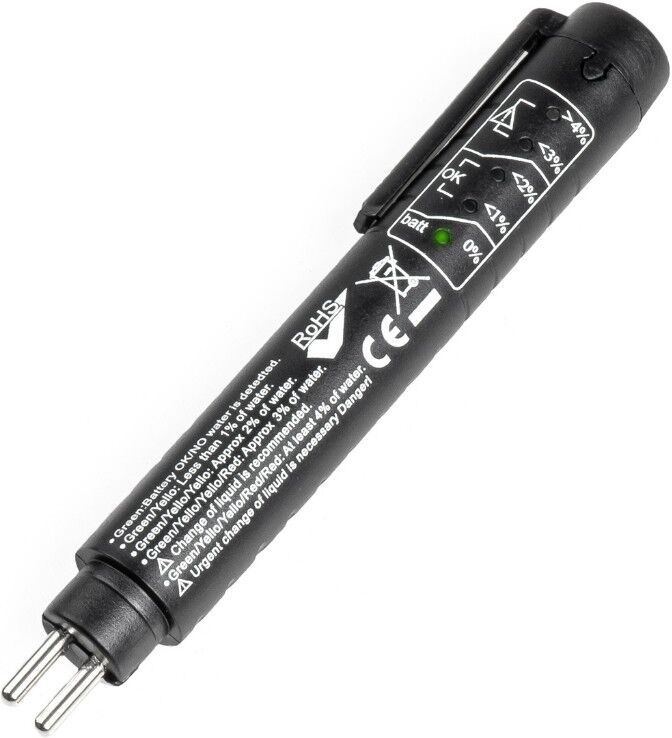
Products related to ENERGY-NE00988-Testing-Unit:
-
SEALEY VS0274 Testing Unit, brake fluidGauge: with LED display; Number of LEDs: 5; Required appliance battery: AAA (Micro), Included in the delivery; Number of device batteries required: 1; Housing Type: Synthetic Material Housing; Voltage [V]: 1.2; DOT specification: DOT 3, DOT 4, DOT 5.1; Registration Type: 22x10.00-9 TL 39J NHS48,99 £*Shipping: 8,45 £Secure redirect to the provider
-
How are colors used in unit testing?
In unit testing, colors are often used to visually represent the status of the tests. For example, green is commonly used to indicate that a test has passed, while red is used to indicate that a test has failed. This color coding makes it easy for developers to quickly identify the status of their tests and take appropriate action. Additionally, colors can be used to highlight specific sections of test results or to differentiate between different types of tests, making it easier to interpret the test output. **
-
What is the unit of potential energy?
The unit of potential energy is the joule (J). Potential energy is a measure of the energy an object has due to its position or state, and it is expressed in joules in the International System of Units (SI). One joule is equivalent to one kilogram meter squared per second squared (kg·m^2/s^2), which represents the amount of energy required to move an object against a force. **
-
What is the unit for energy in physics?
The unit for energy in physics is the joule (J). This unit is named after the English physicist James Prescott Joule and is defined as the amount of work done when a force of one newton is applied over a distance of one meter. The joule is a derived unit in the International System of Units (SI) and is used to measure various forms of energy, including mechanical, thermal, and electromagnetic energy. **
-
What is the unit of energy in physics?
The unit of energy in physics is the joule (J). It is named after the English physicist James Prescott Joule and is defined as the amount of work done when a force of one newton is applied over a distance of one meter. The joule is used to measure various forms of energy, including mechanical, thermal, and electromagnetic energy. **
Similar search terms for ENERGY-NE00988-Testing-Unit
-
AMiO 03123 Testing Unit, brake fluidMaterial: Plastic; Required appliance battery: AAA (Micro); Number of device batteries required: 1; Number of diodes: 5; Number of pins: 2; Height [cm]: 15; Diameter [cm]: 2; Colour: black; Features: with LED lights; DOT specification: DOT 3, DOT 4, DOT 5, DOT 5.16,59 £*Shipping: 8,45 £Secure redirect to the provider
-
How do you calculate the unit of energy?
The unit of energy is typically calculated using the formula E = P x t, where E represents energy, P represents power, and t represents time. Power is measured in watts (W) and time is measured in seconds (s), so the unit of energy is typically calculated in joules (J), which is equal to one watt-second. This formula can be used to calculate the energy consumption of various devices and systems, as well as to determine the amount of energy transferred or transformed in a given process. **
-
What is the formula symbol and unit of energy?
The formula symbol for energy is "E" and the unit of energy is the joule (J). Energy can also be measured in other units such as kilojoules (kJ) or calories (cal), but the standard unit in the International System of Units (SI) is the joule. **
-
What is the standard unit for energy, joule or kilojoule?
The standard unit for energy is the joule. One joule is equal to the work done when a force of one newton is applied over a distance of one meter. The kilojoule is a larger unit of energy, equal to 1000 joules. It is often used to express the energy content of food and the energy expenditure of physical activities. **
-
What is the unit for molar energy in kJ/mol?
The unit for molar energy in kJ/mol is kilojoules per mole. This unit represents the amount of energy per mole of substance, and is commonly used in chemistry to express the energy changes associated with chemical reactions or the energy content of a substance. It allows for the comparison of energy changes between different substances on a per mole basis. **
* All prices are inclusive of VAT and, if applicable, plus shipping costs. The offer information is based on the details provided by the respective shop and is updated through automated processes. Real-time updates do not occur, so deviations can occur in individual cases. ** Note: Parts of this content were created by AI.